

Chicory Root Benefits: What Practitioners Need to Know About This Prebiotic Powerhouse
Your client with Hashimoto’s comes in having cut coffee. She’s doing the morning ritual protocol you recommended. She’s switched to a warm herbal drink. And she keeps asking you the same question: “But is what I’m drinking actually doing anything, or am I just avoiding coffee?”
If that drink contains chicory root — and specifically roasted chicory root — the answer is yes. Chicory root is one of the most clinically substantiated prebiotic ingredients in the functional nutrition toolkit. It’s not a trendy superfood. It’s been studied rigorously, and the evidence for its gut, blood sugar, and hormone-adjacent benefits is genuinely strong.
Here’s what the research actually shows — and the one thing every practitioner needs to know before recommending it to certain clients.
What Is Chicory Root, Clinically Speaking?
Chicory (Cichorium intybus) is a member of the dandelion family. The root, when roasted and ground, produces a dark, rich beverage with a coffee-like flavor profile — which is why it’s been used as a coffee substitute for centuries in European and traditional medicine.
The clinically relevant component is inulin — a fructan-type prebiotic fiber that makes up roughly 68–75% of chicory root’s composition. Unlike digestible carbohydrates, inulin passes through the small intestine intact and reaches the colon, where it becomes substrate for fermentation by specific gut bacteria.
That fermentation process is where the clinical action happens.
| KEY MECHANISM Chicory root inulin is selectively fermented by Bifidobacterium and Lactobacillus species in the colon — the same bacterial groups most relevant to gut barrier integrity, hormone metabolism, and immune regulation in your clients. |
The Clinical Case for Chicory Root in Your Practice
1. Prebiotic Support for the Gut Microbiome
The evidence here is among the strongest of any prebiotic ingredient.
A 2022 randomized, placebo-controlled trial involving 55 subjects at risk for type 2 diabetes found that dried chicory root dramatically increased relative levels of Anaerostipes and Bifidobacterium spp. 3–4-fold, with effects that were dose-dependent and reversible — meaning the microbiome responded predictably to chicory consumption and returned to baseline when it was removed. (Puhlmann et al., 2022, PMC11407914)
Why does this matter for your clients? Bifidobacteria are among the bacteria most directly linked to:
- Maintaining gut barrier integrity (reduced intestinal permeability)
- Producing short-chain fatty acids (SCFAs) that feed colonocytes and reduce systemic inflammation
- Estrogen metabolism via the estrobolome — the collection of gut bacteria responsible for deconjugating estrogen metabolites for recirculation or excretion
For practitioners working with clients dealing with estrogen dominance, PMS, perimenopause symptoms, or autoimmune conditions with an inflammatory gut component — supporting bifidobacteria proliferation is a core clinical goal. Chicory root is one of the most evidence-backed tools to do it.
2. Blood Sugar Regulation and Insulin Sensitivity
Chicory root has a meaningful blood sugar story beyond just fiber.
A 2-month RCT in 49 women with type 2 diabetes found that 10 grams of inulin per day produced significant decreases in blood sugar levels and hemoglobin A1c compared to placebo. The mechanism involves both the slow fermentation of inulin (reducing glucose absorption rate) and the production of GLP-1 — a hormone that enhances insulin secretion and sensitivity.
Chicory root also contains chlorogenic acids, which have been shown to increase muscle sensitivity to insulin independently of the prebiotic effect. This dual mechanism makes chicory root particularly relevant for perimenopausal clients, where insulin resistance is a common and often underaddressed contributor to weight gain, belly fat, and energy dysregulation.
| WHAT TO TELL YOUR CLIENT “Chicory root isn’t just a coffee replacement. It contains fiber that slows how quickly sugar enters your bloodstream, and compounds that help your cells respond better to insulin. For where you are in your hormonal transition, that matters.” |
3. The Estrobolome Connection
This is the angle most general wellness content completely misses.
The estrobolome is the subset of gut bacteria that produce beta-glucuronidase, the enzyme responsible for deconjugating estrogen metabolites in the gut, allowing them to be reabsorbed or excreted. When the estrobolome is disrupted — by dysbiosis, antibiotics, or chronic stress — estrogen metabolism becomes dysregulated.
The direct clinical line: Chicory root feeds bifidobacteria. A healthy bifidobacteria population supports estrobolome balance. Estrobolome balance supports healthy estrogen clearance. This is a mechanistic inference based on the microbial evidence, not a direct clinical trial. But for practitioners working with estrogen dominance, irregular cycles, perimenopause, or endometriosis — it’s a clinically logical connection worth understanding and communicating appropriately.
The key word is “appropriately.” Don’t tell clients that chicory root balances their hormones. Tell them it feeds the gut bacteria responsible for healthy estrogen metabolism. That’s accurate, defensible, and something a smart client will find genuinely useful.
4. Anti-Inflammatory and Antioxidant Properties
A 2022 review (PMC8912540) confirmed chicory to be anti-diabetic, immunomodulatory, antioxidant, and prebiotic, noting it promotes good digestion, regulates appetite, and decreases the risk of gastrointestinal diseases. A 2025 randomized crossover trial (NCT07094191) directly compared caffeine-free chicory coffee to arabica coffee, measuring TNF-α, IL-6, adiponectin, and glucose responses — providing the first direct head-to-head clinical data on roasted chicory as a beverage vs coffee.
The anti-inflammatory compounds of note are:
- Chicoric acid and chlorogenic acid — polyphenols that inhibit pro-inflammatory cytokine production
- Sesquiterpene lactones — bitter compounds with documented anti-inflammatory activity in the gut
- Inulin-derived SCFAs — particularly butyrate, which directly reduces intestinal inflammation and supports the gut barrier
For autoimmune clients on an AIP protocol, the anti-inflammatory compound profile of chicory root is an asset on top of the prebiotic benefit.
Protocol Compliance: Where Chicory Root Fits
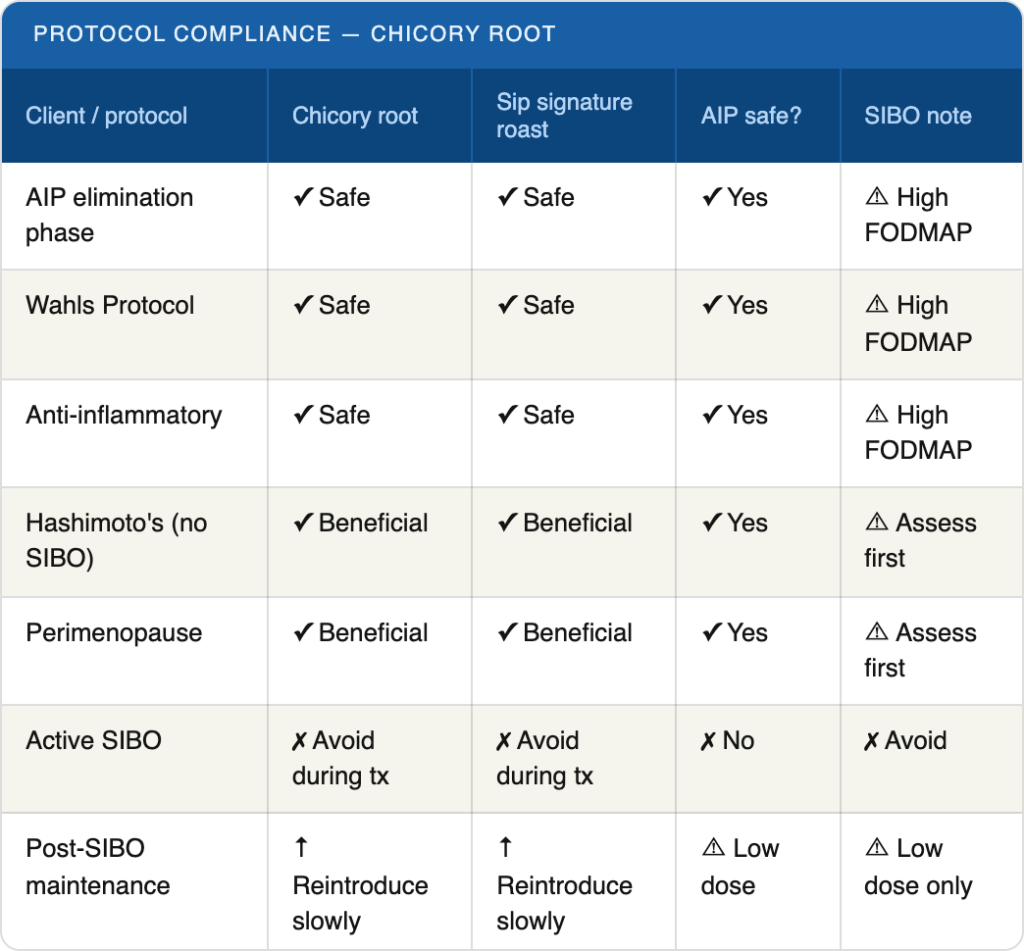
Before recommending chicory root to any client, run it through their current protocol. For a full breakdown of the AIP framework, see The Complete Guide to the AIP Diet. Here’s the quick chicory-specific reference:
| Client Protocol | Chicory Root | Roasted Chicory (Sip) | AIP Safe? | SIBO Note |
| AIP Elimination Phase | ✓ Safe | ✓ Safe | ✓ Safe | ⚠ High FODMAP |
| Wahls Protocol | ✓ Safe | ✓ Safe | ✓ Safe | ⚠ High FODMAP |
| Anti-Inflammatory | ✓ Safe | ✓ Safe | ✓ Safe | ⚠ High FODMAP |
| Hashimoto’s (no SIBO) | ✓ Beneficial | ✓ Beneficial | ✓ Beneficial | ⚠ Assess first |
| Perimenopause | ✓ Beneficial | ✓ Beneficial | ✓ Beneficial | ⚠ Assess first |
| Active SIBO | ✗ Avoid during tx | ✗ Avoid during tx | ✗ Avoid during tx | ✗ Avoid |
| Post-SIBO (maintenance) | ✓ Reintroduce slowly | ✓ Reintroduce slowly | ✓ Reintroduce slowly | ⚠ Low dose only |
The SIBO Caveat: The Most Important Thing in This Article
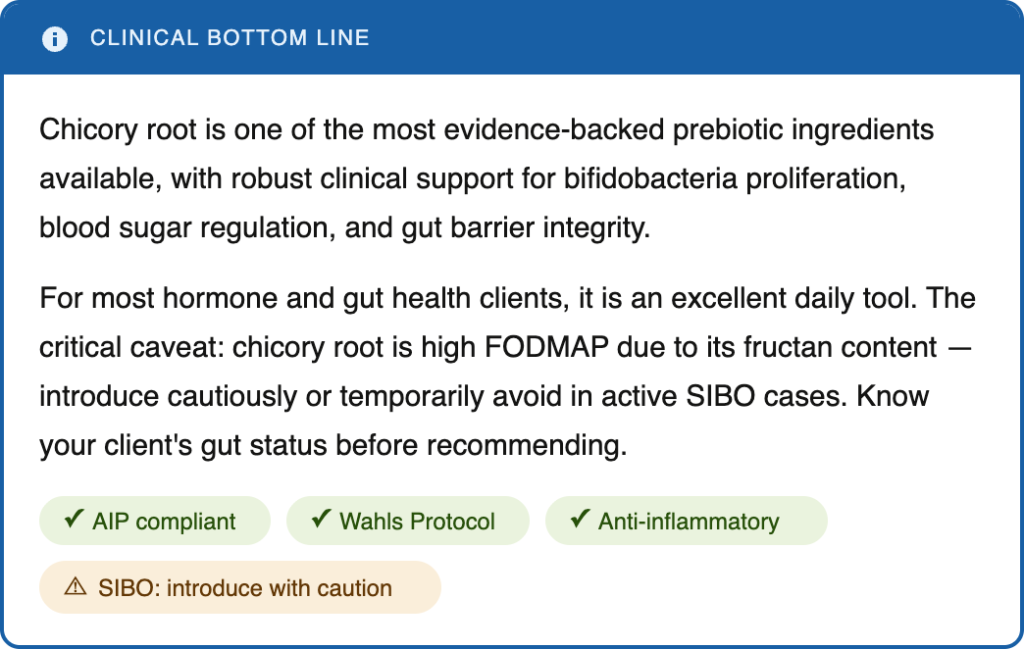
Say this clearly: chicory root is high FODMAP.
Specifically, it’s high in fructans — a type of fermentable carbohydrate that is not well-tolerated during the elimination phase of a low FODMAP protocol or in clients with active SIBO. In these clients, the same fermentation process that makes chicory root so beneficial for a healthy gut can produce gas, bloating, and discomfort in a dysbiotic gut.
This is not a reason to avoid chicory root as a practitioner tool. It’s a reason to know your client’s gut status before recommending it.
- Active SIBO treatment: hold chicory root until treatment is complete and dysbiosis is resolved
- Post-SIBO maintenance: reintroduce slowly at low doses to rebuild bifidobacteria without overloading a still-sensitive gut
- SIBO-negative clients with Hashimoto’s, perimenopause, or AIP: chicory root is an appropriate and well-evidenced recommendation
| PRACTITIONER NOTE The question to ask before recommending is not “is this client AIP?” but “does this client have active small intestinal bacterial overgrowth?” If yes, wait. If no, proceed with confidence. |
One nuance worth noting: roasted chicory root in brewed beverage form (where the grounds are strained out) may have a lower fructan load than chicory root fiber in supplement or powder form. The brewing and straining process may reduce the total FODMAP content. This is worth flagging to your nutritionist reviewer to verify with current Monash data.
Why Roasted Chicory Root Specifically?
Most of the clinical research on chicory root has been conducted on the whole root or roasted root preparations — not on isolated inulin extracts. This distinction matters.
A 2020 study (Pouille et al., J Funct Foods) found that chicory root flour triggered different health effects than isolated inulin alone, suggesting the synergistic role of the full compound profile — including chlorogenic acids, sesquiterpene lactones, and the fiber matrix — in producing chicory’s clinical benefits.
Sip Herbals’ Signature Roast chicory coffee substitute uses whole roasted chicory root alongside roasted carob and dandelion root — a combination that addresses gut, liver, and blood sugar pathways simultaneously. For practitioners looking for a morning ritual tool that is AIP-compliant, protocol-safe, and clinically grounded, Sip’s signature roast is a meaningful distinction from products using isolated inulin as an additive.

FAQs: Questions Your Clients Will Ask
What are the disadvantages of chicory root?
The main drawbacks are gastrointestinal in nature. Chicory root is high FODMAP due to its fructan content, which means it can cause bloating, gas, and digestive discomfort in people with IBS, active SIBO, or fructan sensitivity. These effects are most pronounced with large amounts or in people with existing dysbiosis. Start with small amounts and assess tolerance. Clients on a low FODMAP elimination diet should avoid chicory root during the restriction phase.
Who should not drink chicory root?
Clients with active SIBO should avoid it during treatment. Those with known fructan sensitivity or IBS in the FODMAP elimination phase should also avoid it. Additionally, chicory root is in the Asteraceae/Compositae family, so clients with known ragweed or daisy allergies should be cautioned about potential cross-reactivity. As always, pregnant or nursing clients should consult their OB before adding new herbal preparations.
Is it safe to take chicory root every day?
For clients without active SIBO or fructan sensitivity, daily consumption of chicory root in reasonable amounts is well-tolerated and supported by the clinical literature. The 2022 RCT by Puhlmann et al. used it daily for a sustained period and documented consistent, dose-dependent microbiome benefits. The effects were also reversible — meaning cycling on and off is an option for sensitive clients who want to use it strategically rather than continuously.
Does chicory make you sleepy?
There is no clinical evidence that chicory root causes drowsiness. Unlike coffee, it contains no caffeine, so clients will not experience the stimulant effect or the crash that often follows. Some clients report feeling more settled after switching to chicory-based beverages in the morning, which is likely a cortisol effect — removing the caffeine-induced cortisol spike allows the natural cortisol awakening response to function without interference, which often improves sustained energy over time rather than reducing it.
Is chicory root AIP compliant?
Yes. Chicory root is AIP compliant and has been specifically recommended by the Autoimmune Wellness community as an alternative to Teeccino, which is not AIP compliant. It contains no seeds, grains, legumes, or nightshades.
Can chicory root help with perimenopause symptoms?
Directly — no, there is no RCT studying chicory root specifically for perimenopause symptom reduction. Indirectly — yes, through several mechanisms. Chicory root supports bifidobacteria, which support estrobolome function and healthy estrogen metabolism. It supports blood sugar stability, which is increasingly relevant as insulin sensitivity shifts during perimenopause. And it provides anti-inflammatory polyphenols that address systemic inflammation — a key driver of perimenopausal symptom severity. The clinical argument is mechanistic and logical, not trial-proven. Communicate it accordingly.
What’s the difference between chicory root and chicory root fiber (inulin)?
Chicory root fiber is isolated inulin extracted from chicory root and added to supplements and processed foods. Whole roasted chicory root contains inulin plus chlorogenic acids, sesquiterpene lactones, and other bioactive compounds. Research suggests whole root preparations produce different and potentially broader health effects than isolated inulin. When recommending Sip, the distinction is worth communicating to clients who may have tried inulin supplements without noticeable benefit.
Will chicory root affect thyroid medication absorption?
Chicory root itself is not documented to interfere with thyroid medication absorption the way coffee is. Coffee contains compounds that bind to levothyroxine and reduce absorption, which is why thyroid patients are advised to wait 30–60 minutes after medication before drinking coffee. Chicory root does not have this mechanism. For clients on levothyroxine, switching from coffee to a chicory-based herbal drink for their morning ritual is likely to be beneficial from a medication absorption standpoint.
The Practitioner Takeaway
Chicory root is not a wellness trend. It’s a well-studied prebiotic with specific, documented mechanisms relevant to the gut, hormone, and blood sugar work you’re doing with clients every day. The clinical case for recommending it is strong — with one clearly defined exception.
Know your client’s SIBO status. If it’s clear, recommend confidently. If it’s not clear, investigate first.
For clients who are SIBO-negative and following AIP, Wahls, or an anti-inflammatory protocol, chicory root as part of a daily morning ritual is one of the more defensible ingredient recommendations you can make. The research is there. The mechanism is clear. And unlike many wellness recommendations, you can explain exactly how it works when a smart client pushes back.
WANT THE FULL PROTOCOL? Download The Anti-Inflammatory Morning Protocol — a free clinical resource for practitioners working with hormone and gut health clients. Includes a warm beverage comparison table, condition-specific protocol guidance, and client-ready language.
The Anti-Inflammatory Morning ProtocolSend download link to: |
References
1. Puhlmann ML et al. Dried chicory root improves bowel function, benefits intestinal microbial trophic chains and increases faecal and circulating short chain fatty acids in subjects at risk for type 2 diabetes. 2022. PMC11407914
2. Niness KR et al. Chicory: Understanding the Effects and Effectors of This Functional Food. 2022. PMC8912540
3. Fouré M et al. Chicory Roots for Prebiotics and Appetite Regulation: A Pilot Study in Mice. J Agric Food Chem. 2018;66(25):6439–6449. PubMed 29873488
4. Pouille CL et al. Chicory root flour – A functional food with potential multiple health benefits. J Funct Foods. 2020;74:104174. ScienceDirect
5. Beneo-Institute / University of Reading. Randomized Four-arm Trial on Prebiotic Efficacy of Inulin Type Fructans From Chicory Root. 2020–2021. ClinicalTrials NCT05581615
6. Özcan FÖ. Comparative Acute Effects of Caffeine-Free Chicory vs Arabica Coffee on Inflammatory and Metabolic Responses. 2024–2025. ClinicalTrials NCT07094191
7. FODMAP status: chicory root inulin. Fig Dietitian Review. foodisgood.com
Written by Orleatha Smith, Master Herbalist & Co-founder, Sip Herbals | Fact-checked by [Nutritionist Name] | Last updated: April 2026

Orleatha Smith is a Master Herbalist and cofounder of Sip Herbals, with more than a decade serving the health and wellness community through science grounded, inclusive wellness education. She holds a Master’s Degree in Education, a biology teaching credential, and brings a rare mix of experience as a holistic lifestyle coach, SaaS developer, and organizational development specialist. Her work and insights have been featured in outlets including First for Women Magazine, The Los Angeles Times, and WebMD, alongside podcast and television appearances. Orleatha writes to help readers make practical, evidence informed wellness choices that fit real life.